Can't find it? here! find it

Showing posts with label Japan. Show all posts

Saturday, February 13, 2010

ตอบคำถามวิชาประวัติศาสตร์

การ ละเมิดทรัพย์สินทางปัญญาของผู้อื่นอาจไม่มีกฏหมายหรืออะไำรรับรองได้แต่นั่น เป็นสมบัติของคนต่ำ มันสื่อถึงรากง่าวของบิดามารดาทุกท่านที่คิดจะคัดลอกบทความแปลผม

มีคนถามผมว่า


" ทำไมในแถบตะวันออกไกล ทำไมฝรั่งมันถึงชอบดูถูก จีน(ยังไม่เท่าไร) เกาหลี แต่ทำไมญี่ปุ่น มันกลับยกยอแบบเสมอภาค

ผมเห็นประเทศจีนพยายามทุกวิถีทางที่จะเทียบตะวันตกให้ได้
ทั้งภาษา(ก็ประสบผลสำเร็จ) ประเพณี วัฒนธรรม ต่างๆ
ให้เทศกาลจีนเสมอเทศกาลฝรั่ง
แล้วเวลาฝรั่งไปเปรียบเทียบอะไรก็ตามเวลาถูกเทียบเคียงกับจีน หรือเกาหลี พวกเขาจะดูถูก
                 แต่ทำไมพอกับญี่ปุ่น แต่ก่อนสมัยสงครามชอบเรียกไอ้ยุ่น ไอ้ยุ่น เดียวนี้กลับชื่นชม ติดวัฒนธรรมต่างๆของญี่ปุ่นงองแงม
ทั้งภาษา วัฒนธรรม ลัทธิต่างๆ บูชิโด ความกล้า การ์ตูน ประวัติศาสตร์ เพลง รายการทีวี หนัง ซามูไร นินจา
อะไรแบบนี้
แต่พอกับจีน กับเกาหลี กลับดูถูกซะงั้น
หรือเพราะนิสัยคนชาตินั้นหรือ"

เป็นผมเห็นชอบและตอบได้ในทันทีว่า.........................


 เป็นเพราะการตัดสินใจของผู้นำประเทศจีนตั้งแต่ยุคของซื่อฉีไท่โฮ่ว(ซูฉีไทเฮา)ซึ่งบ้าอำนาจและลำพองในอำนาจของสมเด็จปู่คังซี-หยวน ซื่อ ไข่เป็นต้นมาซึ่งเป็นผู้สร้างรัฐธรรมนูญขึ้นมาและไม่เป็นที่ยอมรับของคนจีน ที่ยึดติดกับจารีตประเพณีที่มีมามากกว่า 3500 ปี!!!! (และก็จะพยายามตั้งตนเป็นฮ่องเต้ในเวลาต่อมา)  พวกกระผมเลยต้องค่อยๆทำค่อยๆมี จนเวลาล่วงเลยไป 50 ปี ปรากฏว่าจีนยังไม่สามารถร่างรัฐธรรมนูญฉบับของจีนได้เอง เพราะมีกบฏที่ยึดติดกับเรื่องเก่่าๆบวกกับแผ่นดินเขาใหญ่และคนก็เยอะมากมัน เลยทำให้คนต่างชาติดูถูกคนจีนเพราะตัวพวกอเมริกาและอังกฤษ(ชาติตะวันตกทั้ง หลาย)เองเคยชนะคนที่ลำพองว่าตัวเองเก่งยิ่ง ..............เลยดูถูก

สมเด็จพระจักรพรรดิโกจอง

เกาหลีในสมัยโฮจองเป็นรัชสมัยที่เกาหลีอ่อนแอที่สุดและลำพองว่าข้ามีจีนปกป้องและก็ปิดประเทศตัวเอง
ก็เลยทำให้เกาหลีเข้าสู่ยุคที่อ่อนแอที่สุด อาวุธยุทโธปกรณ์ก็ล้าหลังกว่าจีนและถูกญี่ปุ่นพิชิดในปี 1910


แต่ในขณะืั้ที่ญี่ปุ่นในปี1867 ได้ร่างรัฐธรรมนูญขึ้นโดยทำลายประเพณีจารีตและระบบศักดินาและก่อตั้งกองทัพ ที่ทรงพลังที่สุด แกร่งที่สุด และทันสมัยที่สุดในสมัยนั้นได้เรียกกันในนาม ทหารกองจักรวรรดิญี่ปุ่น และได้คิดลองดีและเอาชนะรัสเซียได้อย่างเข็ดขาดในปี 1905
เอาขนะเยอรมนีโดยยึดฐานทัพในเอเซียอย่างชิงเต่า(จีน)ได้ในปี 191X(ไม่แน่ใจวันเวลาที่ยึด)
ขยายจักรวรรดิออกไปได้ไกลแสนไกลจนถึงขีดสุดปี1942
และรัญธรรมนูญในปี 1950-1970 เป็นรัฐธรรมนูญที่ให้ความยุติธรรมกับทุกฝ่ายเป็นตัวอย่างรัฐธรรมนูญระดับแนว หน้าในเรื่องความรัดกุมและมีช่องโหว่น้อยนิด


 คำตอบนี้คือการตอบคำถามในกระทู้นี้


การละเมิดทรัพย์สินทางปัญญาของผู้อื่นอาจไม่มี กฏหมายหรืออะไำรรับรองได้แต่นั่นเป็นสมบัติของคนต่ำ มันสื่อถึงรากง่าวของบิดามารดาทุกท่านที่คิดจะคัดลอกบทความแปลผม

หากมีความคิดเห็น ขอขอบคุณที่ทุกท่านมองเห็นและคลิกที่"Post a comment"ที่ไต้บรรยาย

Friday, July 24, 2009

ประวัติทหารกองจักรวรรดิญี่ปุ่น

ทหารกองจักรวรรดิญี่ปุ่น


Imperial Japanese Army (IJA)
大日本帝國陸軍
Dai-Nippon Teikoku Rikugun
ไดนิปปง เทโกกุ ริกุคัง


ช่วงเวลาที่ทำหน้าที่
1867 – 1945
ประเทศ
จักรวรรดิญี่ปุี่น


กำลังทหาร
~1,500,000 คน
Engagements
สงคราม ชิโน-ญี่ปุน
สงครามรัสโซ-ญี่ปุ่น
สงครามโลกครั้งที่๑


Commanders
นายทหารระดับสูง


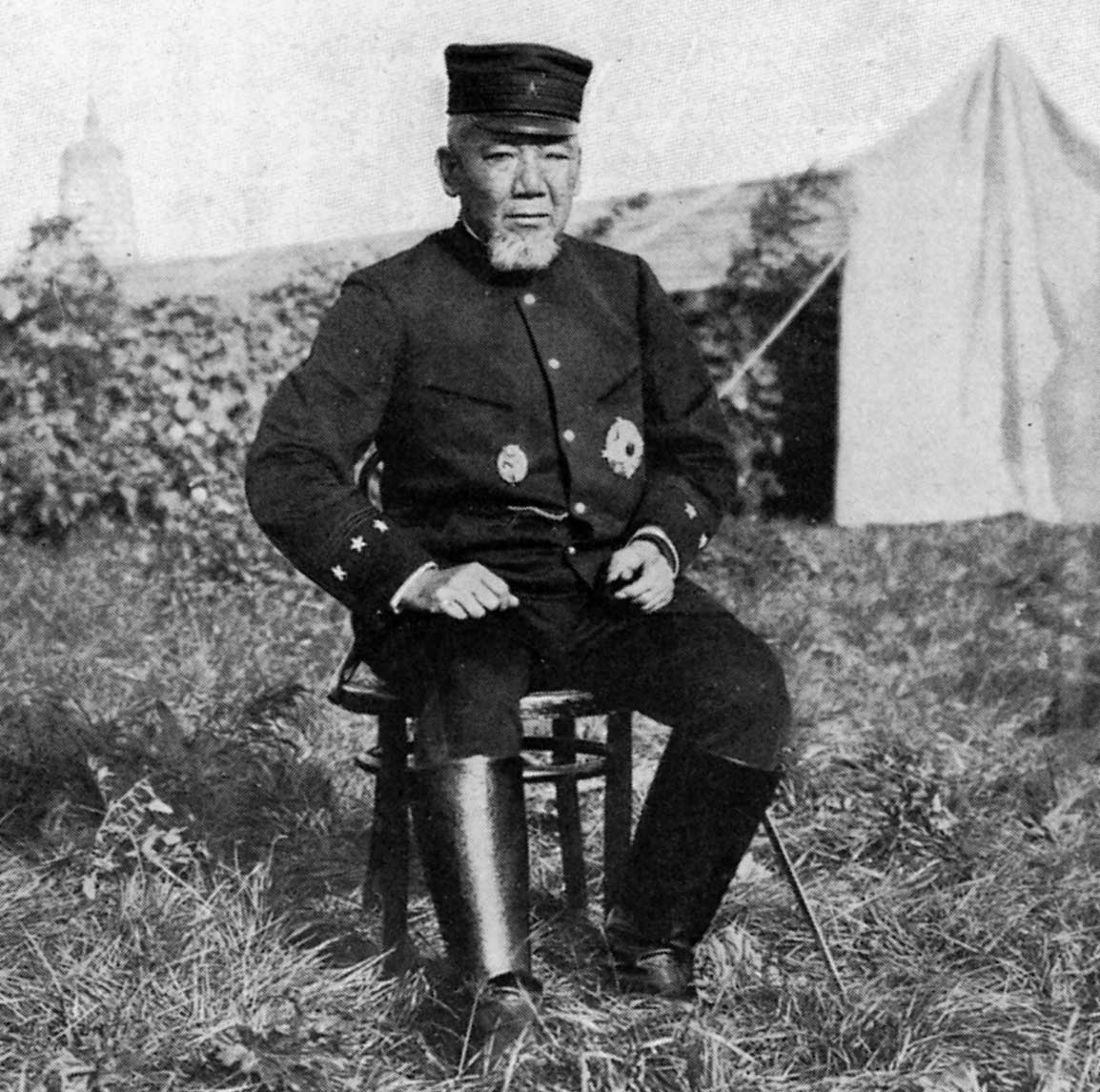
http://www.ndl.go.jp/portrait/1024_1536/427-53/001/0009_l.jpg
Yamagata Aritomo(14 มิถุนายน 1838–1 กุมภาพันธ์ 1922)
‘åŽRŠÞ—¤ŒR‘å�«
Ōyama Iwao (10 ตุลาคม 1842 - 10 ธันวาคม 1916)
http://upload.wikimedia.org/wikipedia/commons/thumb/b/bf/Prince_Kanin_Kotohito.jpg/180px-Prince_Kanin_Kotohito.jpg
Kotohito Kan'in (10 พฤศจิกายน 1865 – 21 พฤษภาคม 1945)


Hajime Sugiyama
http://home.nps.gov/pwr/customcf/apps/ww2ip/assets/images/biography/detail/lgimg_tojo.jpg
Hideki Tojo (30ธันวาคม 1884 – 23 ธันวาคม 1948)
File:Yasuji Okamura.jpg
Yasuji Okamura(15 พฤษภาคม 1884 - 2 กันยายน 1966)
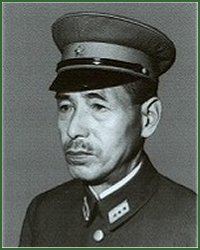
http://www.generals.dk/content/portraits/Hata_Shunroku.jpg
Shunroku Hata(26 กรกฎาคม 1879 - 10 พฤษภาคม 1962)
http://upload.wikimedia.org/wikipedia/commons/f/f5/Tadamichi_Kuribayashi.jpg
Tadamichi Kuribayashi (7 กรกฎาคม 1891-23 มีนาคม 1945)

http://img.asianpacificpost.com/portal2/file/ff8080810b1faf95010b20335cd4004e
Tomoyuki Yamashita(8 พฤศจิกายน 1885 - 23 กุมภาพันธุ์ 1946

Masaharu Homma (27 พฤศจิกายน 1887 – 3 เมษายน 1946)


ทหารกองจักรวรรดิ หรือ Imperial Japanese Army (IJA) (Kyūjitai: 大日本帝國陸軍, Shinjitai: 大日本帝国陸軍, สะกดว่า: Dai-Nippon Teikoku Rikugun), หรืิอจะเรียกว่า กองกำลังญี่ปุ่นเพื่อความยิ่งใหญ่ เป็นชื่อที่ใช้อย่างต่อเนื่องจนกระทั่งปี 1867 ถึงปี 1945. ซึ่งควบคุมโดยนายพลแห่งกองจักรวรรดิ และนักการเมืองหัวรุนแรง,  ซึ่งทำอย่างเพื่อจักรพรรดิ และให้จักรพรรดิเป็นผู้ทรงพระบัญชาแต่เพียงผู้เดียวทั้งสองเหล่าทัพ กองทัพบกและกองทัพเรือ


ประวัติศาสตร์


ภาพการฝึกทหารพิเศษ โดยทหารรับจ้างหลวงแห่งเอโดะ in 1867, ก่อนจะทำสมรภูมิโบชิน(1868–1869) ซึ่งเกิดขึ้นในสมัยปฏิวัติเมจิ
ในสมัยปฏิวัติเมจิ, กองทหารทั้งหมดล้วนซื่อสัตย์และขึ้นตรงกับจักรพรรดิ กบฏซามูไรที่อยู่ในซัทสุมะที่ยังคงใช้ระบบศักดินา ณ จังหวัด ซัทสุมะั และ โคชู.หวังจากล้มล้างระบอบศักดินาของโชกุน โตกุกาวาสำเร็จ

ซึ่งการปฏิวัติครั้งนั้นได้ทำให้ระบบเมจินั้นทำทุกๆอย่างให้เหมือนกับตะวันตกหมดทั้งสิ้น, ทัพที่มีระเบียบมากขึ้น, ขึ้นตรงกับรัฐบาลชุดเดียวที่ไม่ใช่การขึ้ันตรงกับจังหวัดต่อจังหวัด

ด้วยเหตุนี้ก็เลยมีชื่อเรียกรวมๆว่า่่ทหารกองจักรวรรดิหรือ "Imperial Japanese Army" (IJA), กลายเป็นทหารที่มีประสิทธิภาพที่จะทำการรบมากที่สุดทัพหนึ่งในปีโลกในปี 1871. เพื่อที่จะควบคุมระเบียบวินัยนั้นรัฐบาลในสมัยนั้นก็เลยทำหนังสือกฏระเีบียบในปี 1873

การช่วยเหลือจากต่า่งชาติ

ทหารของกองจักรวรรดิในสมัยแรกๆได้รับการช่วยเหลือจากที่ปรึกษาทางทหารชาวฝรั่งเศส, จนกระทั่งสมัยการปฏิรูปการทหารครั้งที่ 2(1872-1880), และครั้งที่สาม(1884-1889). ถึงกระนั้นชัยชนะที่เยอรมันได้มาในสงครามฝรั่งเศส-ปรัสเซีย, รัฐบาลญี่ปุ่นได้ทำสำเนาไปถึงเยอรมันเพื่อเปลี่ยนที่ปรึกษาสงคราม (ผู้พัน ถูกแทนที่โดย von Wildenbrück และผู้กอง von Blankenbourg ในปี 1888)

http://upload.wikimedia.org/wikipedia/commons/thumb/9/9f/Jacob_Clemens_Meckel.jpg/95px-Jacob_Clemens_Meckel.jpg ผู้พัน Jakob Meckel ที่ปรึกษาทางทหารชาวปรัสเซียให้กับรัฐบาลเมจิและสุดท้ายก็ถูกถอดออก


ทหารกองจักรวรรดิในปี 1875.
ในปี 1874, การบุกยึดครองไต้หวันเป็นครั้งแรกที่กองกำลังราชนาวีญี่ปุ่นและทหารกองจักรวรรดิได้ออกโรง
ญี่ปุ่นม่ไ้ด้ใช้พวกนายทหารต่างชาติตั้งแต่ปี1890ถึง1918และ การปฏิรูปการทหารก็เกิดขึ้นอีกครั้ง
ปกครองและดูแลโดย Jacques-Paul Faure, ซึ่งถูกเชิญมาให้สอนวิธีทำสงครามทางอากาศ
http://lycee.reclus.free.fr/Images/ElieJean1.gifJacques-Paul Faure (คนซ้าย)


การบุกโจมตีไต้หวัน

การบุกโจมตีไต้หวันในปี1874 ซึ่งเป็นการโจมตีและออกโรงอย่างเป็นทางการของกองกำลังจักรวรรดิของทั้งสองเหล่าทัพคือทัพเรือและทัพบก

กบฏซัทสุมะ

การปฏิวัติครั้งใหม่ที่เกิดขึ้นไปนั่นทำให้ซามูไรไม่พอใจมากๆ(เพราะถูกออกกฏหมายว่าห้ามพกดาบ)

หนึ่งในผู้นำการกบฏชื่อ Saigō Takamori ผู้นำกบฏสัทสุมะ ซึ่งกลายเป็นการทำสงครามกลางเมืองในที่สุด


ทหารกองจักรวรรดิญี่ปุ่นในสมัยสงครามปราบกบฏสัทสุมะ (ถ่ายใน คุมาโมโตะ, 1877).


กองทหารปืนใหญ่ในหน่วยทดสอบปืนใหญ่ โคชิกาวะ โตเกียว 1882.
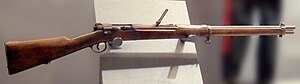
ปืนมูราตะ ถูกพัฒนาใหม่ในป 1880.
ในปี 1890 ทหารกองจักรวรรดิของญี่ปุ่นนั้นได้กลายเป็นกองทหารที่ทันสมัยที่สุดในโลกยุคใหม่ ฝึกปรือมาดี, กำลังใจและอาวุธดี แต่ก็ยังต้องพึ่งพาการค้าจากโลกภายนอก เช่นอเมริกา อังกฤษ ฝรั่งเศส ฯลฯ โดยเฉพาะปืนใหญ่

สงคราม ชิโนญี่ปุ่น
สงครามชิโนญี่ปุ่นครั้งที่ ๑ นั้นเป็นการต่อสู่ระหว่างกองทัพชิง แห่งประเทศจีน กับ รัฐบาลเมจิ แห่งญี่ปุ่น หมายจะยึดครองเกาหลี


สงครามชิโน นั้นเป็นสัญลักษณ์จารึกของความอ่อนแอของกองทัพราชวงชิง ซึ่งญี่ปุ่นมีชัยเหนือกว่าอย่างงดงาม ซึ่งจีนถึงกับตกตะลึงกับความอ่อนแอ ซึ่งญี่ปุ่นเพรียบพร้อมไปเกือบทุกอย่าง ซึ่งมีจำนวน 120,000 นาย


เครื่องแบบทหารกองจักรวรรดิในปี 1900

สงครามรัสโซญี่ปุ่น

สงครามรัสโซญี่ปุ่นเป็นผมมาจากความขัดแย้งระหว่างญี่ปุ่น-รัสเีซีย ส่วนมากเป็นการแข่งขันทางด้านจักรวรรดินิยมที่จะแข่งกันแย่งหรือมีอำนาจเหนือแมนจูเลียและเกาหลี


(บน)แมนจูเลียและเกาหลีเป็นยุทธศาสต์สำคัญที่ญี่ปุ่นจะต้องยึดครองหรือไม่ก็แย่งมาจากจีนและรัสเซียให้จงได้


             ญี่ปุ่นได้สร้างความเจ็บปวดและสร้าวความเสียหายให้กับรัสเซียอย่างรุนแรง; อย่างไรก็ตาม การทำลายนั้นไม่ได้มีผลต่อกาีรที่จะทำลายทหารรัสเซีย. การฝึกฝนที่เข้มงวดของทหารกองจักรวรรดิบวกกับการตัดสินใจอันหลักแหลมของนายพล   ซึ่งเป็นปัจจัยหลักในการกำชัยเหนือรัสเซีย


สงครามโลกครั้งที่หนึ่ง


เครื่องแบบ ทหารกองจักรวรรดิ ชุดนี้สวมใส่ครั้งแรกในยุทการณ์ อ่าวJiaozhou(1914)
จักรวรรดิญี่ปุ่นเข้าร่วมสงครามโลกโดยอยู่ฝ่ายพันธมิตร โดยญี่ปุ่นโจมตีเขตเช่าของเยอรมันในแหลมซิงเต่า(1914)

                  ระหว่าง 1917-18, ญี่ปุ่นมีแผนจะขยายอำนาจและสิทธิพิเศษในแผ่นดินจีนโดยทางNishiharaปล่อยเงินกู้เพื่อนการลงทุน. พร้อมๆกับการเสื่อมสลายของอาณาจักรรัสเซีย        อันเนื่องมาจากปฏิวัติบอลเชวิค(23 ตุลาคม - 8 พฤศจิกายน 1917), ในการแทรกแซงไซบีเลีย
                  กลายเป็นเรื่องที่รู้กันว่าญี่ปุ่นได้ส่งทหารจำนวนมากกว่า 7 หมื่นนาย เพื่อทำการยึดครองไซบีเลียจนถึงทะเลสาปไบคาล
http://www.greenpeace.org/raw/image_full/russia/en/photosvideos/photos/map-of-baikal-lake-area.gif(Bikal lake=ทะเลสาปไบคาล)


 . The army general staff came to view the Tsarist collapse as an opportunity to free Japan from any future threat from Russia by detaching Siberia and forming an independent buffer state.[1] The plan was scaled back considerably due to opposition from the United States.
In July 1918, President Wilson asked the Japanese government to supply 7000 troops as part of an international coalition of 25,000 troops planned to support the American Expeditionary Force Siberia. After heated debate in the Diet, the administration of Prime Minister Terauchi Masatake agreed to send 12,000 troops, but under the command of Japan, rather than as part of an international coalition. Japan and the United States sent forces to Siberia to bolster the armies of the White Movement leader Admiral Aleksandr Kolchak against the Bolshevik Red Army.
Once the political decision had been reached, the Imperial Japanese Army took over full control under Chief of Staff General Yui Mitsue, and by November 1918, more than 70,000 Japanese troops had occupied all ports and major towns in the Russian Maritime Provinces and eastern Siberia.
In June 1920, America and its allied coalition partners withdrew from Vladivostok after the capture and execution of White Army leader Admiral Aleksandr Kolchak by the Red Army. However, the Japanese decided to stay, primarily due to fears of the spread of communism so close to Japan, and Japanese controlled Korea and Manchuria. The Japanese army provided military support to the Japanese-backed Provisional Priamur Government based in Vladivostok against the Moscow-backed Far Eastern Republic.
The continued Japanese presence concerned the United States, which suspected that Japan had territorial designs on Siberia and the Russian Far East. Subjected to intense diplomatic pressure by the United States and Great Britain, and facing increasing domestic opposition due to the economic and human cost, the administration of Prime Minister Kato Tomosaburo withdrew the Japanese forces in October 1922.


Prince Kotohito Kan'in, chief of staff of the Army from 1931 until 1940

การผงาดของระบบนิยมทหารในสมัยโชวะ

In the 1920s the Imperial Japanese Army expanded rapidly and by 1937 had a force of 300,000 men. Unlike western countries it enjoyed a great deal of independence from government. Under the provisions of the Meiji Constitution, the War Minister was held accountable only to the Emperor Hirohito himself, and not to the elected civilian government. In fact, Japanese civilian administrations needed the support of the Army in order to survive. The Army controlled the appointment of the War Minister and in 1936 a law was passed that stipulated that only an active duty general or lieutenant-general could hold the post. As a result, the military spending as a proportion of the national budget rose disproportionately in the 1920s and 1930s, and various factions within the military exerted disproportionate influence on Japanese foreign policy.

The Imperial Japanese Army was originally known simply as the Army (rikugun) but after 1928, as part of the Army's turn toward romantic nationalism and also in the service of its political ambitions, it retitled itself the Imperial Army (kōgun).

สู้รบกับจีน

In 1931, the Imperial Japanese Army had an overall strength of 198,880 officers and men, organised into 17 divisions.[2] The Manchurian incident, as it became known in Japan, was the alleged attack on the Japanese-owned railway by Chinese bandits. Action by the military, largely independent of the civilian leadership, led to the invasion of Manchuria in 1931 and later the Second Sino-Japanese War in 1937. As war approached, the Imperial Army's influence with the Emperor waned and the influence of the Imperial Japanese Navy increased.

สงครามโลกครั้งที่สอง

In 1941, the Imperial Japanese Army had 51 divisions and various special-purpose artillery, cavalry, anti-aircraft and armored units with a total of 1,700,000 men. At the beginning of the Second World War most of the Japanese Army was stationed in China. However, from 1942 soldiers were sent to Hong Kong (23rd Army), the Philippines (14th Army), Thailand (15th Army), Burma (15th Army), Dutch East Indies (16th Army) and Malaya (25th Army). By 1945, there were 5.5 million men in the Imperial Japanese Army.
The Japanese Army performed well in the early stages of the war.
After 1943 they suffered from a shortage of supplies, especially food, heavy weapons, guns, tanks and aircraft, which was worsened by a long-standing and severe rivalry with the Imperial Japanese Navy. It was affected even more by submarine interdiction of supplies and losses to IJA shipping. The supply situation was so bad, large numbers of fighter aircraft became unserviceable for lack of spare parts[3] and medicines were in such short supply, "as many as two-thirds of Japan's total military deaths resulted from illness or starvation."[4]


Lt Gen Arthur Percival, led by a Japanese officer (center), marches under a flag of truce to negotiate the capitulation of Allied forces during the Battle of Singapore, on February 15, 1942.

Fanaticism and war crimes

Throughout the Second Sino-Japanese War and World War II, the Imperial Japanese Army had gained a reputation both for its fanaticism and for its brutality against prisoners of war and civilians alike. After Japan surrendered in the summer of 1945, many Imperial Japanese Army officers and enlisted men were tried and punished for committing numerous atrocities and war crimes.
Major General Tomitarō Horii did issue a "Guide to Soldiers in the South Seas" in late 1941, which ordered troops not to loot or kill civilians. This was intended to prevent a repeat of atrocities that the Army committed in China, however this only applied to men under his command.[5]
Several reasons are theorized for the especially brutal and merciless behavior exhibited by many members of the IJA towards their adversaries or non-Japanese civilians. One is probably the brutal behavior that they themselves experienced. The IJA was known for the extremely harsh treatment of its enlisted soldiers from the start of training,[6] including beatings, unnecessarily strenuous duty tasks, lack of adequate food, and other violent or harsh disciplinary tactics. This was contrary to the Imperial Rescript to Soldiers and Sailors of 1882, which instructed officers to treat subordinates respectfully.[7] Not until 1943 did the senior command realize this brutality had effects on morale and ordered an end to it, an order which was routinely circumvented or ignored.[8].The spirit of gyokusai ("glorious death") saw them order suicidal attacks with knives, when supplies of hand grenades and ammunition were still available.[9]
The reputation of Imperial Army troops during the Pacific War of never surrendering is borne out by the extremely small number captured throughout the entire Pacific campaign compared with their opponents (80,000 British and Commonwealth prisoners were captured at Singapore alone). While the numbers are small by comparison to the European Theatre, in the South West Pacific Area (SWPA) just over 1,000 surrendered in each of 1942 and 1943, around 5,100 in 1944, and over 12,000 in 1945,[10] and might have been greater except for American shooting of prisoners.[11] The effect of psychological warfare was noticeable (about 20% of surrenders were directly due to it, and many more were influenced),[12] amounting to about one POW for every 6,000 leaflets dropped,[13] while the Japanese objected to the "unscrupulous" leaflets,[14] which expressly contained nothing but the truth.[15] This was in stark contrast to IJA's practice of circulating false stories,[8] which leaflets revealed to be false[8] when Army efforts to black out news left the leaflets as the only source of any news.[16]

Imperial General Headquarters and the power of the Emperor in the Shōwa era

During the first part of the Showa era, according to the Meiji Constitution, the Emperor had the "supreme command of the Army and the Navy" (Article 11). Hirohito was thus legally supreme commander of the Imperial General Headquarters, founded in 1937 and by which the military decisions were made.


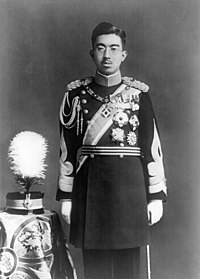
Emperor Shōwa dressed as commander of the Imperial General Headquarters.
The primary sources such as the "Sugiyama memo", and the diaries of Fumimaro Konoe and Koichi Kido, describe in detail the many informal meetings the Emperor had with his chiefs of staff and ministers. These documents show he was kept informed of all military operations and frequently questioned his senior staff and asked for changes.
According to historians Yoshiaki Yoshimi and Seiya Matsuno, Hirohito authorized by specific orders, transmitted by the Chief of staff of the Army such as Prince Kan'in or Hajime Sugiyama, the use of chemical weapons against Chinese civilians and soldiers. For example, he authorized the use of toxic gas on 375 separate occasions during the invasion of Wuhan in 1938.[17] Such weapons were also authorized during the invasion of Changde.
According to historians Akira Fujiwara and Akira Yamada, Hirohito even made major interventions in some military operations. For example, he pressed Field Marshal Hajime Sugiyama four times during January and February 1942 to increase troop strength and launch attack on Bataan.[18] In August 1943, he scolded Sugiyama for being unable to stop the American advance on the Solomon Islands and asked the general to consider other places to attack.[19]
Only in rare moments of special importance, decisions were made in Imperial council. The Imperial government used this special institution to sanction the invasion of China, the Greater East Asia War and to end the war. In 1945, executing the decision approved in Imperial conference, Emperor Shōwa for the first and last time directly ordered via recorded radio broadcast to all of Japan, as his last role as commander-in-chief, the surrender to United States forces.

Post World War II

Article 9 of the Japanese constitution renounced the right to use force as a means of resolving disputes, this was enacted by the Japanese in order to prevent militarism to which had led to conflict. However, in 1947 the Public Security Force formed; later in 1954, with the early stages of the Cold War, the Public Security Force formed the basis of the newly created Ground Self Defense Force. Although significantly smaller than the former Imperial Japanese Army and nominally for defensive purposes only, this force constitutes the modern army of Japan.

Ideology

Japanese nationalism meant that the military was built around a concept of the time period: a Rich Country has a Strong Military. Nationalists asserted that Japan as a land was sacred, and its people were special due to a combination of Zen-Chan and various forms of Japanese Buddhism with Shinto. Service in the Japanese military was seen as service to the Emperor. Each soldier in theory believed it was a great honor to die for the Emperor as the samurai concept "to serve" was deeply ingrained in all the soldiers' culture.
The concept of Yamato-damashii equipped each soldier with a strict code: never be captured, never break down, and never surrender. To be a coward or to be captured was a disgrace to one's family, community, and country. Each soldier was trained to fight to the death and was expected to die before suffering dishonor. Often, imperial soldiers would shout "Banzai" before charging into battle, believing that the exuberant cheer would indicate their willingness to die with honor. Every soldier accepted that they were expected to serve stoically as part of their bushido, represented in the idea of "death before dishonor". Sadao Araki, an Army theorist, devised the contemporary adaptation to bushido code as a Seishin Kyoiku (spiritual training) doctrine for the army. As such, each soldier would leave everything behind when going into the service, needing nothing but honor. Indeed, honor as represented by name and face meant everything to these soldiers. Yamato Damashi is an old Nippon spirit of self-pride and persistence in the face of grave danger, a sort of kokoro.
Tied in with this concept of Bushido was immense, religious respect for the Emperor. Although during Meiji and Taishō eras, the Emperor was practically a figurehead, with the real power being held by the bureaucrats underneath him, he was still considered a divine figure. In theory the commander in chief, the Emperor usually went along with whatever the government "asked" him to do. The Emperor wore the commander-in-chief's uniform, and was saluted by the Imperial Forces, at all ceremonial functions involving the IJA forces.
At the time, the Imperial government could only mobilize the military if the cabinet ministers came to a unanimous consensus on the order. The role of the Emperor lay in giving his blessing to execute and bind such orders. Since the Emperor was required to be present at all Imperial government meetings for their decision to be binding, The Emperor silently observed all the official arguments made by the ministers. Presuming his blessing was given, after an agreement of the ministers, these requests became the orders of the Emperor, enforceable upon the people of Japan.

การเติบโตของทหารกองจักรวรรดิญี่ปุ่น

  • 1870: จำนวน 12,000 นาย.
  • 1885: มีทหารจำนวน 7 กองพัน รวม 1 กองพันทหารรักษาพระองค์
  • ต้นปี 1900, ทหารกองจักรวรรดิญี่ปุ่นได้ทำการบรรจุเพิ่ม ซึ่งเพิ่มตามรายการที่ปรากฏอยู่ดังนี้


    • 380,000 กองทหารเกณฑ์สำรองชุดที่ 1:ทหารเกณฑ์นั้นจะต้องเป็นทหารอย่างน้ิอย 2 ปีครึ่ง
    • 50,000 สำรองชุด 2:เหมือนกับชุดบน
    • 220,000 ทหารประจำชาติ


      • ชุดที่ 1: ผู้ชายที่มีอายุ37 ถึง 40 ปี
      • ชุดที่2: ผู้ชายที่มีอายุตั้งแต่ 20 ปี- 37 ปี พอถึง37ก็จะต้องถูกย้ายไปประจำกับชุดที่ 1


    • ทหาร 4,250,000 นาย ได้รับการฝึกสำเร็จและพร้อมจะทำศึกทุกเมื่อ


  • 1934: เพิ่มจำนวนเป็น 17 กองหมื่น
  • 1940: ทหารอาชีพ 376,000 นาย สำรอง 2 ล้าน รวม 31 กองหมื่น 


    • 2 divisions in Japan (Imperial Guard plus one other)
    • 2 divisions in Korea
    • 27 divisions in China and Manchuria


  • In late 1941: 460,000 active in 41 divisions


    • 2 divisions in Japan and Korea
    • 12 divisions in Manchuria
    • 27 divisions in China
    • plus 59 brigade equivalents.


      • Independent brigades, Independent Mixed Brigades, Cavalry Brigades, Amphibious Brigades, Independent Mixed regiments, Independent Regiments.


  • 1945: 5 million active in 145 divisions (includes three Imperial Guard), plus numerous individual units, with a large militia


  • Japan Defense Army in 1945 had 55 divisions with 2 million men.
Total military in August 1945 was 6,095,000.

โรงผลิตอาวุธ

  • โรงผลิตอาวุธซางามิ: ร่วมกับ Mitsubishiเพื่อการพัฒนาและผลิตรถถัง
  • โรงผลิตอาวุธโอซาก้า: ร่วมกับ Mitsubishi(มิตซูบิชิ) และ Hitachi(ฮิตาชิ) ผลิตรถถังและปืนใหญ่หรืออาวุธสนับสนุน
  • โรงผลิตอาวุธซาเซโบะ: ร่วมกับ Mitsubishi, ผลิตรถถัง
  • โรงผลิตอาวุธเฮโจ: ร่วมกับนันบุ, ผลิตปืนสั้นและปืนยาว
  • โรงผลิตอาวุธมุคเด็น: ร่วมกับ นันบุ, ผลิตปืนยาว
  • โรงผลิตอาวุธโคคุระ: ร่วมกับ นันบุ, ผลิตปืนเบาและปืนกลหนัก
  • โรงผลิตปืนโตเกียว: the Army administrative and testing center related with light and heavy weapons production
  • Japanese Army Tachikawa Arsenal: dedicated to develop and manufacture aircraft for the Imperial Japanese Army Air Service
  • Japanese Army Koishikawa Arsenal

Organization of the Imperial Japanese Army


Casualties

Over the course of the Imperial Japanese Army's existence, millions of its soldiers were either killed, wounded or went missing in action.
  • Taiwan Expedition of 1874: 543 (12 killed in battle and 531 by disease)
  • First Sino-Japanese War: The IJA suffered 13,823 dead and 3,973 wounded
  • Russo-Japanese War: The number of total Japanese dead in combat is put at around 47,000, with around 80,000 if disease is included
  • World War I: 1,455 Japanese were killed, mostly at the Battle of Tsingtao
  • World War II:


    • Deaths


      • 2,566,000 Armed Forces dead including non-combat deaths, plus 672,000 civilian dead (includes 1,506,000 killed in action)


    • 810,000 missing in action and presumed dead
    • 7,500 prisoners of war


Add Video

Wednesday, June 17, 2009

สมรภูมิเลเต้(เลตี้)=Battle of Layte


สมรภูมิเลเต้

วันที่ 20 ตุลาคม – 31 ธันวาคม 1944
สถานที่ เกาะเลเต้,ฟิลิปปิน

ผล
ชันชนะเด็ดขาดของพันธมิตร
ประเทศที่ต่อสู้กัน
สหรัฐ
Flag of the Philippines ฟิลิปปิน
ออสเตรเลีย
จักรวรรดิญี่ปุ่น
นายพล
Flag of the United States ดักลาส แมคอาเธอร์
Flag of the United States วอร์ลเตอร์ คลเอเกอร์Flag of the United States แฟรงค์กิน ซี ซิเบิร์ท
Flag of the United States จอห์น อา ฮอร์จ
Flag of the Philippinesโรเบอโต ซี คังเจียน
Flag of the Empire of Japan โทโมยูกิ ยามาชิตะ

Flag of the Empire of Japan โซซากุ ซูซูกิ
Flag of the Empire of Japan ชิโระ มากิโนะ
กำลังรบ


อเมริกา 200,000 คน
ฟิลิปปิน ทหารกองโจร 3,189 คน


จักรวรรดิญี่ปุ่น 55,000 นาย
บาดเจ็บและเสียชีวิต


3,500 นาย
12,000 บาดเจ็บ


49,000 นาย


นำเรื่อง


ฟิลิปปินนั้นเป็นประเทศที่มีทรัพยากรณ์ธรรมชาติเยอะมาก, และก็มียางเยอะมาก, และเป็นเส้นทางที่จะนำไปเสริมและสนับสนุนในการบุกเข้าโจมตี เกาะบอร์เนียวและเกาะ สุมาตรา รวมทั้งน้ำมัน ปิโตรเรียมได้ถูกส่งไปญี่ปุ่น: สำหรับอเมริกา การที่จะยึดฟิลิปปินซึ่งเป็นจุดยุทธศาสตร์ที่จะต้องยึดให้ได้เพราะเป็นกุญแจที่จะบุกญี่ปุ่นต่อไป, ซึ่งจะเป็นที่ๆเติมเชื้อเพลิงไปโจมตีเพื่อปลดแอกจีนและน่านน้ำแปซิฟิก

จากเดือนตุลาคมปีค.ศ.1944, กองทัพอากาศของสหรัฐอเมริกาแห่งกองพลอากาศยานที่ ๓ ภายใต้การบังคับบัญชาของกลาสี William F. Halsey ผู้ซึ่งกำชัยเหนือญี่ปุ่นที่เกาะโมโรไตกับเกาะเปาโล, ท่าอากาศยานของพวกเขาถูกทำลาย 500 แห่งและ 180 ท่าเรือการค้าเพื่อสกัดการคมนาคมของกองจักรวรรดิญี่ปุ่น. ซึ่งทำการสำเร็จอย่าสงสวยงามในฟิลิปปิน, Okinawaและ Formosa(ไต้หวัน)

Leyte, คือหนึ่งในเกาะที่ใหญ่ที่สุดในฟิลิปปิน, มีท่าลึกเยอะมากเหมาะแก่การยึดครองเพื่อทำการคมนาคม เติมกระสุนให้ทัพเรือ และเมื่อการเติมกระสุนเพื่อเอาใว้ไปโจมตีอเมริกา ออสเตรเลีย และอังกฤษ ได้สะดวกขึ้น


แผนการโจมตี Leyte ของฝ่ายพันธมิตร ในวันที่ 20 ตุลาคม 1944
ทั้งเหนือและไต้นั้นมีต้นไม้ปกคลุมอย่างหนาแน่นและล้อมรอบด้วยภูเขา
อากาศกึ่งอบอุ่น


กองคาราวานของสหรัฐในเลตี้

ประชากรของอ่าวเลตี้นั้นมีประมาณ 900,000 คน ส่วนใหญ่เป็นชาวประมงและชาวนา, ซึ่งเป็นกลุ่มคนที่สามารถส่งเสริมกองกำลังของทัพสหรัฐอเมริกา, ผู้มีอำนาจส่วนใหญ่นั้นให้การสนับสนุนกลุ่มผู้ก่อการร้ายกอริลล่า ซึ่งโจมตีอย่างรุนแรงต่อญี่ปุ่นและถูกคาดคะเนว่าถูกทำลายไปประมาณ 20000 คน ส่วนใหญ่เป็นกองกำลังที่ 16 ของ Shiro Makino


ยกพล
อ่าว Leyteคือการสู้รบครั้งหใญ่มากของการโจทฃมตีประสมโรงของฝ่ายอเมริกันและพันธมิตร ในสมรภูมิแปซิฟิก นายพล MacArthur รับหน้าที่ให้เป็นเจ้าขุนพลทั้งสามเหล่าทัพในย่านภาคกลางและตะวันตกเฉียงใต้ของแปซิฟิค.


สถานการณ์บนอ่าวดังกล่าว,วันที่ 20 กันยายน ถึง 2 พฤษจิกายน 1944
http://upload.wikimedia.org/wikipedia/commons/1/1e/Gen_Walter_Krueger.jpg
สหรัฐหน่งยที่ 6 พันเอก Walter Krueger เป็นหน่วยจู่โจมหลัก, ซึ่งรับผิดชอบการทำงานและออกคำสั่งให้สองทัพ

ทหารเดินเท้าหน่วยที่ 10 หน่วยทหารม้าืที่24 ของพันโท Franklin C. Sibert

พร้อมกับทหารเคลื่อนที่เร็วที่ 14, 7,และหน่วยเกณฑ์ใหม่ที่ 96 ของพลโท John R. Hodge

32, 77, และ381 เป็นกองกำลังสำรองเพื่อใว้เสริมกองกำลังรบพิเศษ(หน่วยกล้าตาย)ที่ 6, เพื่อทำการยึกปากอ่าวและชายหาดให้ได้. หน่วยที่ 6 ซึ่งอยู่ภาคใต้บังคับบัญชาของ ผบ. พลตรี. Hugh J. Casey

ยกพลขึ้นบก


การบุกเข้าโจมตีอย่างเป็นทางการได้เริ่มในวันที่ 17 ตุลาคม พร้อมกับหน่วยทำลายกับระเบิดหน่วยที่ 6 แถวๆระหว่างเกาะ 3 เกาะ(ซึ่งมีกับระเบิดมากมาย) ของปากอ่าว เลเต้, หน่วยเรนเจอร์ หรือหน่วยทหารเคลื่อนที่เร็วในเกาะ Suluan และเกาะ Dinagat เมื่อตอน 12 นาฬิกา 30 นาที. บนเกาะ Suluan, มีฐานทัพญี่ปุ่นเล็กๆซึ่งต้องถูกทำลายและเก็บใว้ใช่ส่งกำลังเสริม. วันต่อมา, เกาะที่ 3 เกาะ Homonhon, ถูกยึกได้ง่ายโดยไม่เสียเลือดเนื้อเลย. ขณะเดียวกันต้องพยายามทำลายระเบิดไต้น้ำซึ่งจะเป็นอุปกรณ์ที่อาจทำให้สงครามยืดเยื้อได้


กองทหารม้า ภาคที่ ๑
ขึ้นฝั่งที่อ่าวเลเลต้


บุกโจมตีในหุบเขาเลเต้ไต้
กองกำลังที่ ๖ ได้ต่อสู้เต็มกำลังกับการต่อสู้ที่ไม่สม่ำเสมอ กองทหารม้าที่ ๑ ของผู้การ Verne D. Mudge ยึดเมืองสำคัญของเกาะเลเต้, ทาโลกบัน(Tacloban), ในวันที่ 21 ตุลาคม. และในวันที่ 23 ต.ค. นายพล MacArthur ได้จัดงานเลี้ยงฉลองเพื่อเรียกกำลังใจให้กับกองกำลังและพี่น้องประชาชนท้องถิ่น ณ เกาะ เลเต้ . กองร้อยทหารม้าที่ ๑ และ ๒ เตีรยมกำลังที่จะป้องกันตัวเองจากการโจมตีเพื่อยึดดินแดนคืนจากญี่ปุ่น


ทหารอเมริกันได้เคลื่อนที่อย่างระมัดระวังเข้าไปในบังเกอร์ติดอาวุธหนัก
กองกำลังเอ็กซ์ที่เหลือ, กองพันที่ 24 ซึ่งนำโดยพลเอก Frederick A. Irving เดินทางเข้าไปในสถานที่ๆเสี่ยงอันตรายอย่างขีดสุด. หลังจากรบแบบข้ามวันข้ามคืนได้ฆ่าทหารญี่ปุ่นเกือบ 800 นายของกองทัพบกที่ 19และ 34 ของญี่ปุ่นและยึดครองเนื้อที่ของเกาะเหนือ
    วันที่ 1 พฤศจิกายน,7วันหลังจากที่กองทหารม้าบุกเข้าไปในเขตของศัตรูและมีกองปืนใหญ่ช่วยเหลือ เข้าไปในหุบเขาเลเต้จนถึงอู่ต่อเรือ Carigara. สร้างความเสียหายอย่างมากแก่ญี่ปุ่นถึง 3,000 นาย


กองปืนใหญ่ 155 มิลลิเมตรกำลังยิงสนับสนุนที่เนิน


ยานเกราะของอเมริกา ณ หัวอ่าว Labiranan

กองร้อยทหารราบที่ 14(XXIV)และที่ 17 นำโดยผู้พัน Archibald V. Arnold บุกโจมตีสนามบินของฝ่ายญี่ปุ่นถึง4ที่แบบฉับพลัน ระหว่างเมืองเล็กๆของDulagและBurauen. 21ตุลาคม กองกำลังที่ 184 และ 32ได้พร้อมใจกันบุกอย่างหฤโหดใส่หมู่บ้านที่ซึ่งเป็นที่มั่นของญี่ปุ่น ณ Burauen
http://encycl.opentopia.com/enimages/2175/2174581/Ph_locator_leyte_burauen.png


 การโจมตีกลับของกองทัพญี่ปุ่น


กองกำลังที่ 6ของอเมริกาและพันธมิตรได้บุกเข้าไปในเลเต้ได้มากขึ้นทำให้ญี่ปุ่นมีอุปสรรคทำให้ทัพอากาศไม่สามารถลงจอดได้
         เป็นเหตุให้กองกำลังทางอากาศญี่ปุ่น 200 ลำบุกโจมตี กองเรืออเมริกาที่อยู่ริมๆหาดทำให้ญี่ปุ่นต้องใช้แผนที่สุดเด็ดเดียวที่ชื่อว่า กามิกาเซ่


ปืนใหญ่อเมริกันที่กำลัึงปฏิบัติยุทธการณ์ทาโครบัน

           แต่สิ่งที่น่ากลัวยิ่งกว่าสำหรับกองทัพเรือสหรัฐคือ การที่ญี่ปุ่นตัดสินใจที่จะทำลายทัพหลักที่อู่ในอ่าวเลเต้ โดยใช้กับดักล่อให้มายึดสนามบินหลอก แต่ล่อให้มาติดกับไม่สำเร็จทำให้ญี่ปุ่นไม่สามารถทำลายทัพเรือได้สำเร็จ


นักซุ่มยิงฝ่ายญี่ปุ่น ๓ คนถูกยิงหมกโคลน

On 23 October the approach of the enemy surface vessels was detected. U.S. naval units moved out to intercept and the air and naval Battle of Leyte Gulf, the largest naval battle in the Pacific, was fought from 23 October to 26 October: the Japanese suffered a decisive defeat. Nonetheless by 11 December the Japanese had succeeded in moving to Leyte more than 34,000 troops and over 10,000 tons of materiel, most through the port of Ormoc on the west coast, despite heavy losses to reinforcement convoys, including engagements at Ormoc Bay, because of relentless air interdiction missions by U.S. aircraft.


Advance into northern Leyte Valley


The Japanese reinforcement presented severe problems for both Krueger and MacArthur. Instead of projected mopping up operations after clearing the east side of Leyte, the Sixth Army had to prepare for extended combat in the mountains on its western side, which included landing three reserve divisions on Leyte, which pushed back Gen. MacArthur's operations schedule for the Philippine campaign and the War Department's deployment plans in the Pacific.

The 1st Cavalry and 24th Infantry Divisions linked up at Carigara on 2 November highlighted the successful opening drive of the campaign. After seventeen days of combat operations, the Sixth Army had all of its first and second phase objectives under control, as well as one third-phase objective, Abuyog. In addition, elements of the 7th Division had pushed across the island from the southern end of the XXIV Corps sector and controlled approaches to the town of Baybay on the west coast. Only one key area, Ormoc Valley on the west side of the island, remained to be taken.

To clear Ormoc Valley, Gen. Krueger planned a giant pincer operation, with X Corps forces moving south through the mountains and XXIV Corps units pushing north along the western shore. To overcome the expected increased resistance, especially in the mountain barrier to the north, Krueger mobilized his reserve forces, the 32nd and 77th Infantry Divisions, while MacArthur activated the 11th Airborne Division. The 21st RCT pulled out from the Panaon area to rejoin the 24th Division and replaced by a battalion of the 32nd Infantry. On 3 November, the 34th Infantry moved out from west of Carigara to sweep the rest of the northern coast before turning south into the mountains. The 1st Battalion soon came under attack from a ridge along the highway. Supported by the 63rd Field Artillery Battalion, the unit cleared the ridge, and the 34th Infantry continued unopposed that night through the town of Pinamopoan, recovered numerous heavy weapons abandoned by the enemy, then halted at the point where Highway 2 turns south into the mountains.


Battles of Breakneck and Kilay Ridges


On 7 November the 21st Infantry went into its first sustained combat on Leyte when it moved into the mountains along Highway 2, near Carigara Bay. The fresh regiment, with the 19th Infantry's 3rd Battalion attached, immediately ran into strong defenses of the newly arrived Japanese 1st Division, aligned from east to west across the road and anchored on a network of fighting positions built of heavy logs and interconnecting trench lines and countless spider holes, which became known as "Breakneck Ridge".

A typhoon began on 8 November, and heavy rains that followed for several days further impeded American progress. Despite the storm and high winds, which added falling trees and mud slides to enemy defenses and delayed supply trains, the 21st Infantry continued its slow and halting attack, with companies often having to withdraw and recapture hills that had been taken earlier. The Americans seized the approaches to Hill 1525 two miles (3 km) to the east, enabling Gen. Irving to stretch out the enemy defenses further across a four-mile (6.5 km) front along Highway 2.

Five days of battling against seemingly impregnable hill positions and two nights of repulsing enemy counterattacks proved fruitless, so Gen. Irving decided on a double envelopment of the enemy defenders. The 19th Infantry's 2nd Battalion swung east around Hill 1525 behind the enemy right flank, cutting back to Highway 2, three miles (5 km) south of Breakneck Ridge. To take the left flank to the west, Irving sent the 34th Infantry's 1st Battalion under Lt. Col. Thomas E. Clifford, over water from the Carigara area to a point two miles (3 km) west of the southward turn of Highway 2 and moved it inland. After crossing a ridge line and the Leyte River, they approached the enemy left flank at 900-foot (270 m) Kilay Ridge, the highest terrain behind the main battle area. Both battalions reached positions only about 1,000 yards (910 m) apart on opposite sides of the highway by 13 November despite strong opposition and heavy rains. Clifford's battalion promptly attacked Kilay Ridge on the west, while the 2nd Battalion assaulted a hill on the east side. Neither unit achieved their objectives.


Filipino volunteers carry supplies to the 12th Cavalry Brigade

It took Clifford's men two weeks of struggle through mud and rain—often dangerously close to friendly mortar and artillery fire—to root the enemy out of fighting positions on the way up Kilay Ridge. On 2 December Clifford's battalion finally cleared the heights overlooking the road, and 32nd Division units quickly took over. Clifford's outfit suffered 26 killed, 101 wounded and 2 missing, in contrast to 900 enemy dead. For their arduous efforts against Kilay Ridge and adjacent areas, both flanking battalions received Presidential Unit Citations. Clifford received the Distinguished Service Cross for the action. It was not until 14 December that the 1st Cavalry Division and the 32nd Division finally cleared the Breakneck-Kilay Ridge area, placing the most heavily defended portions of Highway 2 between Carigara Bay and the Ormoc Valley under X Corps control.

Throughout this phase, American efforts had become increasingly hampered by logistical problems. Mountainous terrain and impassable roads forced Sixth Army transportation units to improvise resupply trains of Navy landing craft, tracked landing vehicles, airdrops, artillery tractors, trucks, even carabaos and hundreds of barefoot Filipino bearers. Not surprisingly, the complex scheduling slowed resupply as well as the pace of assaults, particularly in the mountains north and east of Ormoc Valley and subsequently in the ridgelines along Ormoc Bay.


เดินทางเข้าไปในหุบเขา โอม็ก


With the X Corps making headway through the northern mountains, the XXIV Corps struggled to muster forces around Baybay for the northern drive up the western Ormoc Valley coast. By mid-November the XXIV Corps still had only the 32nd Infantry in western Leyte, with 7th Division remnants still securing Burauen. Only the arrival of the 11th Airborne Division in strength around 22 November finally made Gen. Hodge allow the entire 7th Division to the west. On the night of 23 November, the 32nd Division suddenly came under attack by the Japanese 26th Division with its 2nd Battalion was pushed back, but they regained lost ground the next day. Gen. Arnold ordered his units to dig in and attached the 1st Battalion, 184th Infantry, to the 32nd Infantry, including reinforcements from the 767th Tank Battalion, the 49th Field Artillery Battalion, and a Marine Corps 155 mm battery from the cancelled Yap operation. Pummeled by heavy fire from these artillery units, the Japanese concentrated on them on the night of 24 November, and put four 105 mm pieces out of action. The 57th Field Artillery Battalion reinforced them the next day, giving the 7th Division five additional batteries to support what had become a major defensive effort. The battle for Shoestring Ridge continued, as the Japanese mounted two more attacks on consecutive nights despite heavy casualties. Not until 27 November were U.S. troops able to take the offensive, with some 500 enemy dead and 29 abandoned machine guns outside and within the defensive perimeter discovered during their northern advance.

Gen. Arnold finally began his advance toward Ormoc with a novel tactic. On the night of 4 December vehicles of the 776th Amphibian Tank Battalion put to sea and leapfrogged north along the coast 1,000 yards (910 m) ahead of the ground units. The next morning, the tanks moved to within 200 yards (180 m) of the shore and fired into the hills in front of the advancing 17th and 184th regiments. This tactic proved effective, greatly disorganizing the defenders, except where ground troops encountered enemy pockets on reverse slopes inland, shielded from the offshore tank fire. The 7th Division pushed north with two regiments which encountered heavy enemy fire coming from Hill 918, from which the entire coast to Ormoc City could be observed. Two days of intense fighting against enemy units enabled the 17th and 184th regiments to clear the strongpoint, after which the advance accelerated. By 12 December, Gen. Arnold's lead battalion was less than ten miles (16 km) south of Ormoc City.


จุดจบของหุบเขา


While Gen. Arnold moved closer to Ormoc, the Japanese made a surprise attack on the Burauen airfields with the 16th and 26th Divisions in the central mountains, combined with the 3rd and 4th Airborne Raiding Regiments from Luzon. Some 350 Japanese paratroopers dropped at dusk on 6 December, mostly near the San Pablo airstrip. Although poorly coordinated, the enemy attack yielded the seizure of some abandoned weapons which they managed to use against the Americans over the next four days. Hastily mustered groups of support and service troops of the 7th Division held off the Japanese until reinforcements from the 11th Airborne and 38th Infantry Division, concentrated enough strength to contain and defeat the enemy paratroopers by nightfall of 11 December. With a few American supply dumps and aircraft on the ground destroyed and construction projects delayed, the enemy attacks on the airfields failed to have any effect on the overall Leyte Campaign.


Situation at Leyte, 7 November to 31 December 1944


หลังสงครามจบ


สมรภูมิเลเต้นั้นอเมริกาและพันธมิตรสูญเสียและบาดเจ็บ 15584 ตาย 3,504 คน ออสเตรเลียตาย 30 และบาดเจ็บ 64 เมื่อญี่ปุ่นนำกำลังกามิกาเซ่ถล่มเรือ

ญี่ปุ่นสูญเสียโดยประมาณ 49,000 โดยที่ปกป้องที่มั่นเลเต้ได้
while the navy lost 26 major warships and 46 large transports and merchantmen in the campaign. The struggle also reduced Japanese land-based air capability in the Philippines by more than fifty percent, forcing them to depend on suicidal kamikaze pilots. Some 250,000 troops still remained on Luzon, but the loss of air and naval support at Leyte so narrowed Gen. Yamashita's options that he now had to fight a defensive, almost passive, battle of attrition on Luzon, the largest and most important island in the Philippines. In effect, once the decisive battle of Leyte was lost, the Japanese gave up hope of retaining the Philippines, conceding to the Allies in the process a critical bastion from which Japan could be easily cut off from outside resources, and from which the final assaults on the Japanese home islands could be launched.


บรรณานุกรม


  • Drea, Edward J. (1998). "Leyte: Unanswered Questions". In the Service of the Emperor: Essays on the Imperial Japanese Army. Nebraska: University of Nebraska Press. ISBN 0-8032-1708-0.
  • History of United States Naval Operations in World War II. Vol. 13: The Liberation of the Philippines--Luzon, Mindanao, the Visayas, 1944-1945 by Samuel Eliot Morison (2002) University of Illinois Press, ISBN 0-252-07064-X

  • Battle for Leyte, 1944: Allied And Japanese Plans, Preparations, And Execution by Milan N. Vego (2006) Naval Institute Press, ISBN 1-55750-885-2

  • World War II in the Pacific: An Encyclopedia (Military History of the United States) by S. Sandler (2000) Routledge, ISBN 0-8153-1883-9